
Scroll through to see how cooperative games enrich social studies, science, language arts, math, and physical education, helping students connect ideas, support one another, and discover that learning is better together.
Cooperative Games
that teach Academic Subjects
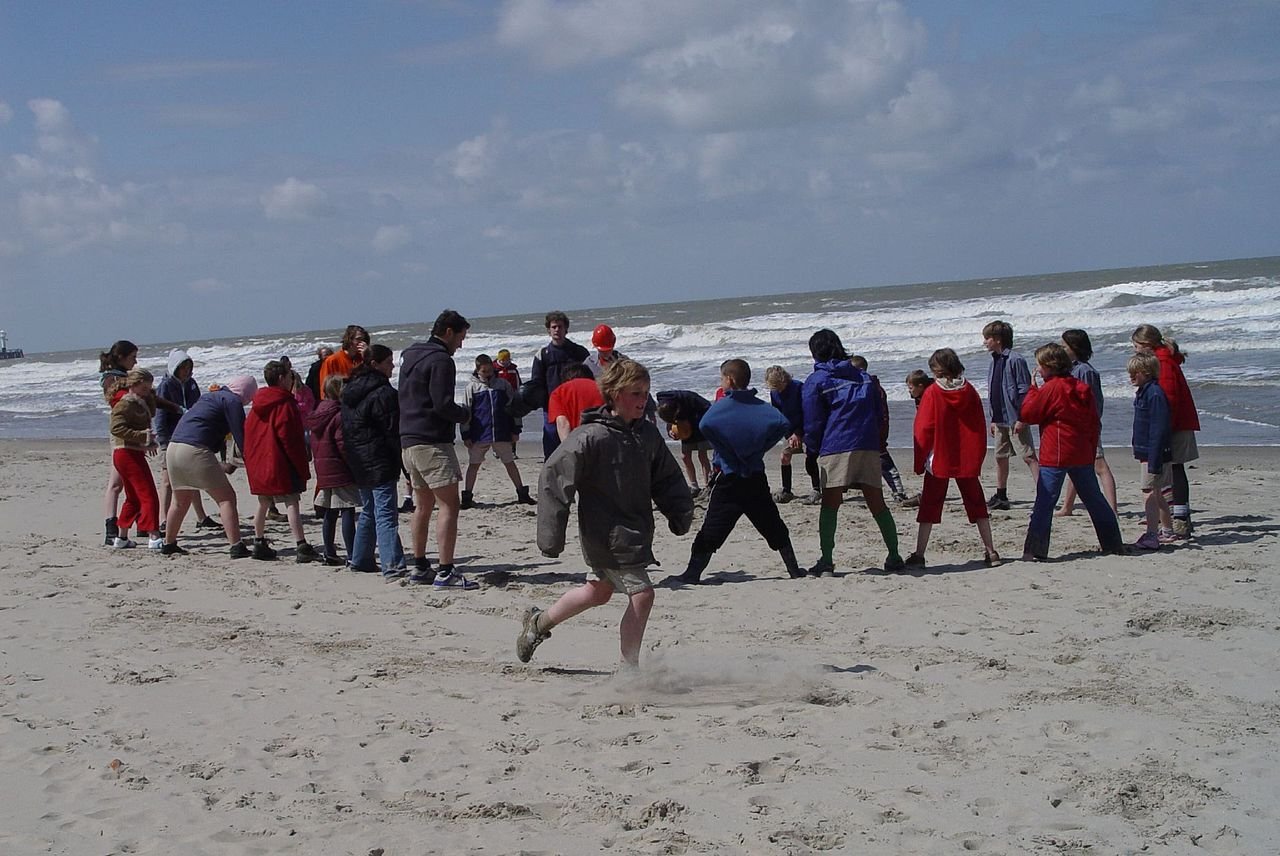
World Peace Game
In this game, students create a peaceful community by individuals who catch the spirit of peace from a peaceful leader. The game models the influence of peaceful social leaders—Ghandi, Thich Nhat Hahn, Peace Pilgrim, or Martin Luther King for example. Before the game starts, secretly designate one of your students the Peace Leader. Now, call the group together and explain that the game consists of everyone walking around the room and greeting one another by looking each other in their eyes, shaking hands, and saying ‘Peace be with you.” The only exception is that the Peace Leader will wink when he or she shakes someone’s hand. The person who has been winked at will greet two more people in the usual way then sit down in a calm position with eyes closed, exemplifying peace. As the Peace Leader completes the journey around the room, more and more people will quietly be seated, and the room will gradually manifest the quality of peace.
Social Studies Games
History’s Heroes
Students stand in a circle. Moving clockwise around the circle, students state their own name and the name of someone from history that they admire. If you are studying a particular historical period, you can ask students to pick their heroes from that period. This is a memory game, so each player has to name the players before him and their heroes in order. Helping is allowed when players get stuck. In the next round, every player has a chance to share what they admire about their hero.
Webbing
Here is a game that makes the interdependence of all the biotic and abiotic components of an ecosystem very clear. Children stand in a circle. The leader stands within the circle close to the edge with a ball of string. “Who can name a plant that grows in this area?” …Brodiaea…Good. Here, Miss Brodiaea, you hold the end of the string. Is there an animal living around here that might eat Brodiaea?…Rabbits? Ah, a sumptuous meal. Mr. Rabbit, you take hold of the string here. You are connected to Miss Brodiaea by your dependence on her flowers for your lunch. Now, who needs Mr. Rabbit for his lunch?
Continue connecting the children with string as their relationships to the rest of the group emerge. Bring in new elements and connections such as other animals, soil, water, and so on, until the entire circle of children is strung together in a symbol of the web of life.
To demonstrate how each individual is important to the community, take away one member of the web by some plausible means. For example, a fire or a logger kills a tree. When the tree falls, it tugs on the strings it holds. Anyone who feels a tug on the string is in some way affected by the death of the tree. The process continues until every individual is shown to be affected by the destruction of the tree.
Suzanne’s Note: This activity was developed by Joseph Cornell and featured in “Sharing Nature With Children.” Thanks Joseph.
Science Games
Investigators
In biology, play a Forensics game. One team writes up the description of a crime. The description must feature clues that can be investigated through science. For example: Ask that the crime could allow fingerprints to be left behind, lies and a cover-up, and a handkerchief left at the scene. The other team tries to figure out “who dunnit” based on the evidence and what they know about forensic science; for example DNA testing. In a successful game, both the crime and its solution require use of inference, deduction, and skillful reasoning from evidence.
The Story of Science
Science content can be viewed as a narrative, a story. So have your students assemble in a circle and tell a science story, chapter upon chapter. If someone forgets part of the narrative, others chime in to help. If you are teaching about plate tectonics for example, your students can begin with Wegener’s hypothesis of continental drift and end with the discovery of magnetic stripes. Younger students could create a story centered on the topic of pollination—allowing children to add bees, butterflies, fruit, flowers, grocery stores, people and what-not to the unfolding story.
Fortunately/Unfortunately Variation: A variant of this game was taught to Suzanne by Nitai Deranja of the Living Wisdom Schools (Thanks Nitai.) It’s called “Fortunately/Unfortunately.” In Fortunately/Unfortunately, students tell a progressive story. But in this case students begin their turn with the word “Fortunately” or “Unfortunately.” This game, when turned into a science game, can be quite challenging; it requires knowledge of all the effects of a particular natural event. For example, Player 1 says: “Unfortunately, an earthquake occurred yesterday.” Player 2: “Fortunately, the earthquake only registered 5.1 on the Richter Scale.” Player 3: “Unfortunately, the epicenter was in downtown San Francisco.” Player 4: “Fortunately, seismic gaps indicated an earthquake was probable. Player 5: “Unfortunately, seismic gaps can only predict earthquake probability within a window of 10 years or more.” Etc.
Science Sequence Games
Science is full of processes that proceed in steps: the development of a plant from a seed, the stages of cell division, the formation of a sedimentary rock, succession in a meadow, the steps of a chemical reaction, etc. Learning these processes can be turned into cooperative games in various ways.
For example, depict or describe individual steps of the process you want the students to learn on different cards. Students shuffle the deck and draw cards. When each player draws a card, he places it in the correct sequence with respect to the other cards.
Or play a line-up game. In a line-up game, students again put items in order. But now, they hold their cards and walk themselves into a line in the correct order without talking. Sequences such as the steps of cellular division can be used. Or relative distances can be put in order. For example, geographical locations can be lined-up in terms of distance from your school. Or students represent astronomical objects and line up in terms of distance from the Sun.
Language Arts Games
Cooperative Stories
Students sit in a circle and build a story together by taking turns. Where one storyteller leaves off, the next one begins. This basic structure is adaptable to all grade levels and can be used in various ways.
The most challenging version is for each storyteller to add a single word to the progressive storyline. But players can take turns adding sentences or paragraphs. To make this game more academic, students can practice building proper sentences or paragraphs. Or the format can be used to review a story that the class has read together.
A modification of this game (attributed to Arnold, 1972) is called Because. In Because, the first player describes an event; the second player describes the cause; and the third player describes a consequence. For example: (Player 1) “The cat jumped out of the window onto the lady’s head”; (Player 2) “The cat jumped out of the window onto the lady’s head because there was a fire in the house”; (Player 3) “The cat jumped out of the window onto the lady’s head because there was a fire in the house. Then the lady realized the house was burning, and she called the fire department.” Now it goes on to another Player #1 to begin a new thread in the story.
Cooperative Alphabet (Reading Practice)
This game is like the foregoing where kids line up in alphabetical order. But in this version, kids each choose a card with a picture on it. The pictures show items beginning with each letter, but the words are not spelled out. (For example, “A” is represented by a picture of an apple not accompanied by the word “apple.”) Again, children are encouraged to help one another get into line but no words can be exchanged!
Cooperative Alphabet (Pre-Reading Practice)
Distribute big cards with letters of the alphabet on them. Ask children to line up in order without talking, assembling the alphabet. Children are encouraged to help one another but no words can be exchanged!
Math Games
Human Number Line
This is a game that involves sequencing. It can be adapted to decimals, fractions, integers, etc. Give each student a large card with a number on it. They self-assemble in numerical order without talking. For more fun, have kids play against a timer so they have to scramble quickly into line. A fun variation is to play this with positive and negative integers such that pairs of kids choose to be the positive and negative side of 1, 2, 3, etc. Kids should catch on quickly that they need to position themselves symmetrically around the “0” card to build a number line of all the integers.
This game was developed by Suzanne Lyons, founder CooperativeGames.com.
Math Musical Chairs
This game is suitable for upper elementary school through high school. You can play it with any math topic. Prepare a sheet of problems of varying difficulty. Place a sheet on each desk in the room. Play music and let students work on the problems individually. Now stop the music and collect half the sheets. Turn the music on again, and let students work in pairs on the remaining sheets. When the time is right, turn off the music, and collect half the sheets again so that students work on the remaining problems in groups of four. Finally, play the music again and let students finish the assignment in groups of four. The teacher scores the exercise by counting the total correct answers on all the sheets collected through all the rounds so the group scores best when everyone works fast or when kids who can solve the hard problems focus on them. After your class tries this once or twice, they will figure out strategies to maximize the overall group score.
This game was developed by Suzanne Lyons, founder CooperativeGames.com.
Teacher Student Role Play
Pass around a hat containing various math problems on a strip of paper. Provide two copies of each problem. Papers with the same problem should be both labeled as 1, 2, 3 etc. to make it easy for students with the same problem to find each other. Students pair up and solve their problem together. When they have completed the problem, they become the “teachers” of it. Now pairs of students join to make cooperative groups of four students. The “teachers” teach the problem to the “students”—their partners who haven’t yet worked the problem.
This game was developed by Suzanne Lyons, founder CooperativeGames.com.
P.E Games
Collective Hoops
This game is good for older kids. It requires one balloon or beach ball and one hula hoop for each pair of students. To begin, scatter the hula hoops on the gym floor. Students work in pairs. Partners tap the balloon or ball back and forth in a nonstop fashion. At the same time, they endeavor to pick up a hoop, then tap their balloon through it, and place the hoop back on the floor. Partners keep moving in a different direction to pick up a different hoop. Every time they complete the goal, they score a point. The goal is for the entire group to score as many points as possible in a given time period. This is a very active game that takes physical as well as mental—and social—coordination.
This game comes from Terry Orlick, “Cooperative Games and Sports,” Thank you Terry Orlick!
Tug-of-Peace
Participants group themselves around a rope that has been tied in a knot to form a circle. Players squat down around the rope, holding the rope with both hands. At the count of three, all players lean back and-using the energy of the group-they stand up. When everyone has stood up (and cheered), players can, on the count of three again, carefully lean back into a squat.
In this game, the counterbalance support that players provide to one another is a graphic representation of mutual support and cooperation. It’s a totally different experience than Tug-of-War, which can be a painful exercise that activates aggression and leaves players in the dirt.
Blob Tag
In this version of tag, “It” chases the other players and tries to tag them. But in this case, when “It” tags someone, the two join hands. Every time another player is tagged, he or she joins hands with the growing blob of “It”.
Suzanne’s notes: Play this game outside in an area free of obstacles and hazards. It’s good for Mixed Ages.
More Fun & Free
Cooperative Games
Games for Community Building
Games for Children
Games for Teens & Adults
Games for Holidays & Special Events